🔍 Inside this article:
- Overview of the series and studio production
- Complete technical specifications and ratings
- In-depth story and animation analysis
- Character biographies and voice actor guide
- Final verdict and fan impact
Breaking traditions and setting new records, the industry is currently undergoing a massive shift thanks to the latest from One Piece. Produced by Toei Animation and spanning the Action, Adventure, Fantasy genre, the series debuted in the Fall 1999 season. Rated 8.73/10 by over 2,664,145 members on MyAnimeList and bookmarked as a favourite by 250,601 fans, this is one of the most talked-about anime titles in recent memory — and with good reason.
📋 Complete Series Information
| Japanese Title | ONE PIECE |
| Studio | Toei Animation |
| Producers | Fuji TV, TAP |
| Source | Manga |
| Genres | Action, Adventure, Fantasy |
| Age Rating | PG-13 - Teens 13 or older |
| Season | Fall 1999 |
| Duration | 24 min |
| Members on MAL | 2,664,145 |
| Favourited by | 250,601 |
🎭 Plot Synopsis & Story Overview
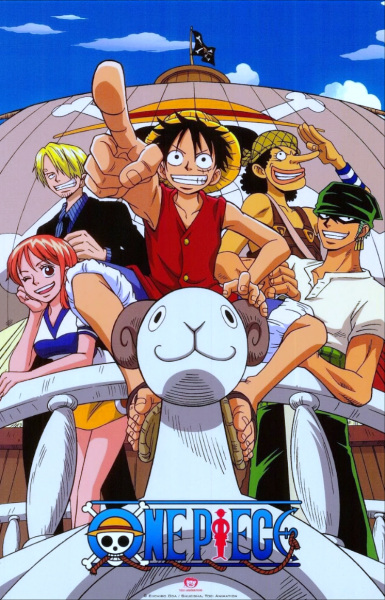
Barely surviving in a barrel after passing through a terrible whirlpool at sea, carefree Monkey D. Luffy ends up aboard a ship under attack by fearsome pirates. Despite being a naive-looking teenager, he is not to be underestimated. Unmatched in battle, Luffy is a pirate himself who resolutely pursues the coveted One Piece treasure and the King of the Pirates title that comes with it. The late King of the Pirates, Gol D.
Roger, stirred up the world before his death by disclosing the whereabouts of his hoard of riches and daring everyone to obtain it. Ever since then, countless powerful pirates have sailed dangerous seas for the prized One Piece only to never return. Although Luffy lacks a crew and a proper ship, he is endowed with a superhuman ability and an unbreakable spirit that make him not only a formidable adversary but also an inspiration to many. As he faces numerous challenges with a big smile on his face, Luffy gathers one-of-a-kind companions to join him in his ambitious endeavor, together embracing perils and wonders on their once-in-a-lifetime adventure.
📖 Storytelling & Narrative Depth
From the very first sequence, One Piece establishes a tone that is uniquely its own. It is a production that understands the value of mystery, slowly peeling back layers of narrative complexity to reveal a heart that is surprisingly human and deeply resonant. The way the story balances large-scale external conflict with intimate internal struggle is nothing short of masterful.
The pacing of One Piece deserves particular recognition for its confidence. In an era where many productions rush toward the next spectacle, this series understands that restraint is itself a form of drama. Long, nearly silent sequences communicate character interiority with extraordinary efficiency; a held gaze, a hesitant step, the subtle tension in a hand — these micro-moments accumulate across episodes and explode with emotional force at precisely the right moment.
🎨 Animation Quality & Visual Excellence
Toei Animation has delivered animation for One Piece that does not merely tell the story — it enhances and amplifies it at every turn. Action sequences are choreographed with the kind of spatial clarity and kinetic energy that demands to be watched at least twice: once to absorb the sheer technical brilliance of the motion design, and once to catch the dozens of small storytelling choices embedded within each cut. The studio's decision to vary its frame rates deliberately — slowing to create weight, accelerating to create chaos — demonstrates a sophisticated understanding of animation as a dramatic tool rather than a technical process.
🎵 Soundtrack & Audio Design
The musical architecture of One Piece is as considered and precise as its visual design. The composer has developed a thematic vocabulary of recurring motifs that evolve alongside the characters who carry them — a simple melody introduced in a quiet, hopeful early scene returns later, transformed almost beyond recognition, to devastating emotional effect. The orchestration swells and contracts with the dramatic needs of each sequence, and the decision about when to use silence is as carefully considered as any note.
🌍 Cultural Impact & Global Legacy
What One Piece has demonstrated, above all else, is that the ceiling for what anime can achieve — commercially, artistically, culturally, and emotionally — is higher than even its most enthusiastic advocates had previously argued. It stands as a proof of concept for a kind of anime production that refuses all arbitrary limitations on ambition, depth, or scale, and its legacy will almost certainly be to raise the expectations that audiences bring to future works across the entire medium.
🎙️ Voice Cast & Character Guide
When words fail, the voice cast of One Piece steps in to deliver the kind of nuanced, deeply felt performances that define the very best of the medium. Their ability to convey complex emotional states through subtle vocal shifts is truly impressive.


The primary voice cast features Cho as Brook, Yao, Kazuki as Franky, Houki, Katsuhisa as Jinbe, Tanaka, Mayumi as Monkey D., Luffy, Okamura, Akemi as Nami, Yamaguchi, Yuriko as Nico, Robin, and others. Each member of the voice cast contributes an individual vocal signature that becomes inseparable from the character they inhabit. Even in their absence from a scene, the echoes of their performances linger, shaping how we interpret the actions of those around them.
📝 Final Verdict
One Piece is, in the most straightforward sense, exactly the kind of anime that reminds you why the medium matters. It is technically excellent, emotionally honest, thematically rich, and consistently, deeply entertaining — a combination that is far rarer than it should be. We at AnimeFans will continue to track its progress and bring you the most comprehensive, thoughtful coverage available anywhere. Make sure to subscribe and follow for more.